Ecuador's Shrimp Boom – Lessons for the Global Industry
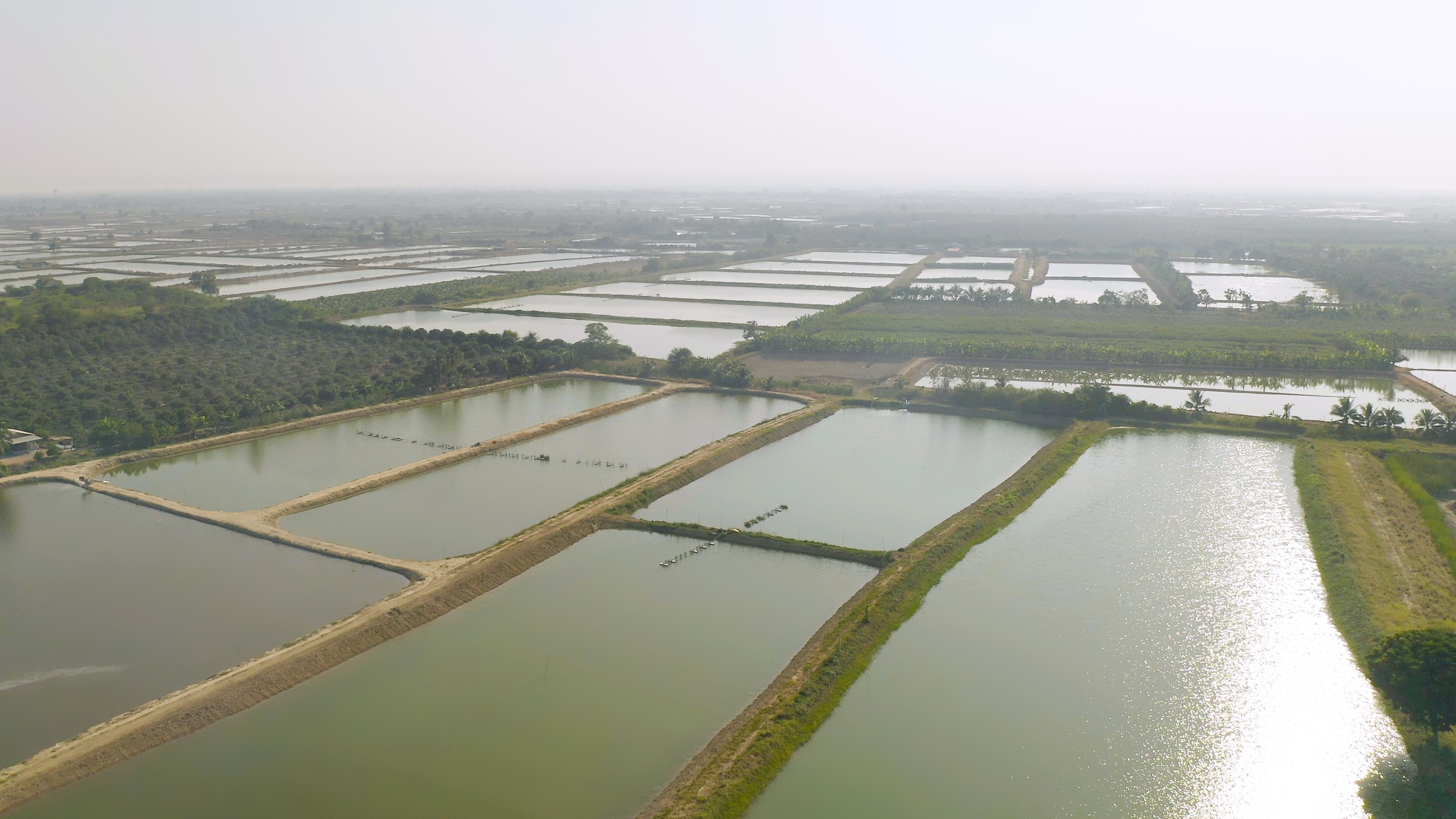
Ecuador's shrimp industry has had a remarkable decade. Between 2015 and 2025, the country's shrimp exports more than quadrupled, closing last year at USD 7.5 billion and confirming Ecuador's position as the world's largest shrimp exporter. Deliberate investments, a willingness to adopt new technologies, and a production model that has consistently delivered growth are among key factors for Ecuadorean success story. Few industries in global food production have scaled at this pace, and fewer still have done so while simultaneously raising the bar on efficiency and sustainability.
Why the World's Largest Feed Companies Are Betting on Ecuador
Global aquafeed leaders established operations in Ecuador years ago. Skretting, BioMar, Cargill, and Vitapro built vertically integrated supply chains that have helped drive the country's feed sector toward world-leading efficiency, with many investing in their own R&D facilities, demonstration farms, and smart feeding systems on the ground. More recently, a new wave of entrants has signalled that the ambition to grow Ecuador's shrimp sector is far from exhausted. In February 2026, Thai Union Feedmill announced a USD 55 million investment to build its first South American feed production facility in the country. Weeks later, India's Avanti Feeds took a stake in that same venture, marking its formal entry into the South American market. Major feed companies from three continents are now present or actively building in Ecuador and they look for not only deliver high quality feed, but also services and technologies that can support farmers.
A Live Proving Ground for New Technology
Ecuador's scale is only part of the story. When automatic feeding systems began rolling out across Ecuadorian farms in 2014, export growth accelerated from an average of 8.7% per year to 18% annually through to 2023. The country's large, consolidated farm structures have enabled faster returns on technology investment than almost anywhere else in the world, creating a commercial environment where innovation is adopted quickly and its impact is measurable at scale. Ecuador has effectively become the industry's most active proving ground.
That innovation is broadening well beyond feed management. Ecuador's scale and openness to adoption has made it the fastest proving ground for a new generation of shrimp technologies, as spearheaded by our portfolio companies:
- Biomass estimation – one of the industry's most persistent operational challenges: Sonar technology by Minnowtech gives farmers real-time visibility into pond populations, enabling better decisions on feeding, harvest timing, and stock management.
- Feed optimisation: Wittaya Aqua's data-driven platform helps producers benchmark feed efficiency against real production data across species and geographies, moving the industry toward farm-specific optimisation grounded in actual field performance rather than generic models.
- Biosecurity: As farms intensify and stocking densities increase, disease pressure grows proportionally. Hadl and Hedros are among the companies developing diagnostics and treatment solutions that producers will need to manage biosecurity effectively as their operations continue to scale.
What makes Ecuador particularly valuable as a reference point is that many of these technology solutions are not geography-specific. Ecuador's scale and openness to adoption has allowed these solutions to be tested, refined, and proven at commercial scale faster than elsewhere. The learnings are transferable, even where the production systems differ significantly.
Mapping Global Shrimp: Patterns and Regional Differences
Shrimp farming looks very different depending on where you are in the world. Production systems, technology adoption rates, biosecurity standards, feed conversion benchmarks, and investment readiness vary considerably between Ecuador, Southeast Asia, South Asia, and other major producing regions. The extensive lagoon systems of Latin America operate under entirely different constraints to the intensive pond systems common across Asia. Smallholder dynamics in South Asia shape technology adoption and financing in ways that do not map onto the corporate-scale operations driving Ecuador's growth. These distinctions carry real consequences for investors evaluating opportunities, for technology companies identifying entry points, and for policymakers designing support frameworks.
Understanding these differences, in depth and across regions, is what our upcoming Hatch Blue global shrimp study sets out to do. We are mapping how shrimp farming systems are evolving across all major producing countries: where technologies are being adopted, where performance gaps remain, where investment is flowing, and what the next wave of innovation looks like when viewed through a truly global lens.
If you are working in the shrimp sector as a producer, investor, technology company, or industry stakeholder and would like to contribute to or engage with this work, we would like to hear from you. Contact us here.
Written by Goncalo Santos [June 25, 2026]
Related Posts
Where Is Capital Flowing in Norway’s Salmon Farming Landscape?
Maine: A Natural Hub for Blue Biotechnology
Canada's First Aquaculture Studio: What We Learned