Takeaways from our U.S. aquaculture report launch
The U.S. is one of the world's largest seafood markets and home to some of the world's deepest capital markets. Yet relatively little investment flows into domestic aquaculture. Hatch Blue's report, Unlocking Investment in U.S. Aquaculture: Barriers, Opportunities and Pathways Forward, finds that the challenge is not simply a lack of available capital, but the conditions needed to attract it.
The report points to a small domestic production base, a limited investment track record, a financing gap between early grants and commercial lending, and regulatory uncertainty. It also stresses that production and technology businesses carry different risks and need different kinds of capital. A panel at the launch took these findings further: how companies move beyond the limits of the home market, where the opportunities lie in seaweed, and what investors need to see.
Joining the panel were Tony Chen, CEO of Manolin, one of Hatch Blue's first portfolio companies; John Soukas, CEO and Co-founder of Norfolk Green Ventures; and Caitriona Kelleher, Managing Director of Early Stage Investments at Hatch Blue. Watch the full panel discussion or read our key takeaways from the discussion below.
From a smaller home base to global markets
Our report finds that a small domestic market is a particular barrier for technology companies, which need customers to sell to and a base to pilot their products. Manolin, which develops AI models for fish health and disease management, started in the Chesapeake Bay working with oyster farmers. According to Tony Chen, the U.S. was an ideal testbed, but the challenge came when Manolin looked to grow. Furthermore, he highlighted that a whole state like Washington might produce a few hundred million dollars of aquaculture a year, about the size of a single Norwegian company, and Norway has many such companies.
“For us, it was seeing the opportunities of simply being able to sell more and really understanding how the industry worked," says Tony Chen.
Norway also had something the U.S. lacked at the time: an established aquaculture technology ecosystem. Today, Manolin works across most salmon-farming regions and into Southeast Asia, while remaining headquartered in Denver. This pattern repeats across Hatch Blue's portfolio, where many U.S. companies operate predominantly overseas. This is one of the opportunities the study highlights: U.S. aquaculture technology companies can build solutions in the U.S. and sell them to a much larger global market.
Finding commercial opportunities for seaweed
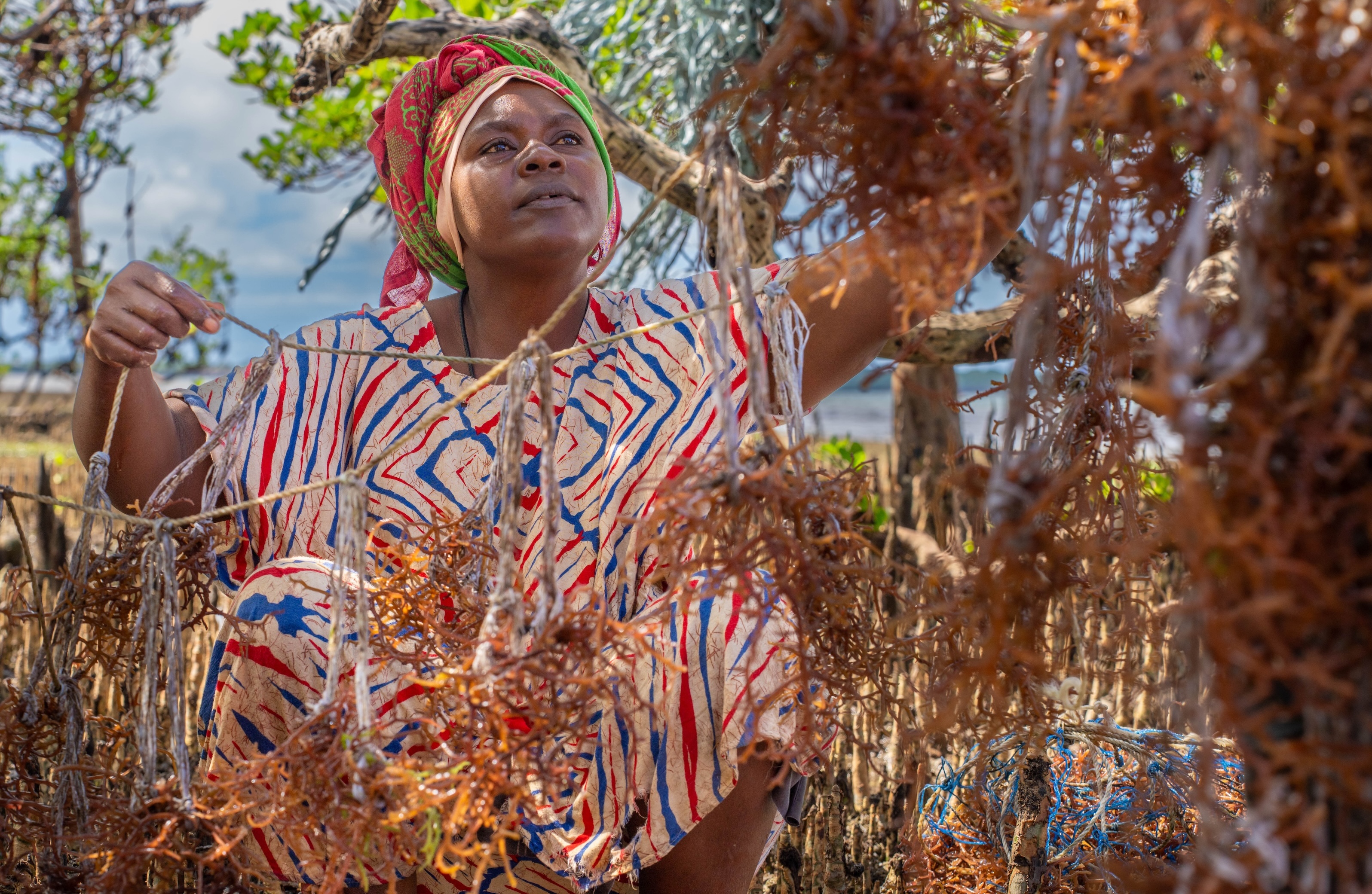
Across aquaculture's categories, the U.S. aquaculture report finds the opportunities in technology, feed and biological inputs, and shellfish, while seaweed's value is moving downstream and finfish is more selective. For seaweed, it stresses building processing capacity and reliable buyers alongside production. John Soukas from Norfolk Green Ventures, which invests in seaweed, has called it the next unicorn of the oceans. For years, few shared that view, but interest is picking up: in the past six months, he has seen growing attention from major investment banks, fashion houses and the media.
Their approach is pragmatic, particularly at a time when ESG has become a difficult term in the U.S., and capital is more expensive. Rather than waiting for seaweed to replace conventional materials entirely, Soukas suggests looking for applications that fit existing products and supply chains, even in small quantities.
“We need to follow the path of least resistance [...], opportunities that fit into existing supply chains. [...] we need something that has margin and can create demand. Because I think the farming part, we can solve pretty easily,” John Soukas adds.
One example he is highly enthusiastic about is ink. A seaweed-waste alternative to the carbon black used in conventional ink could offer a higher-margin, cleaner product. Echoing our findings on the sector's limited track record, he said the industry needs a clear first commercial success.
What investors need to see
Our research also points to the sector's limited investment track record. With few visible exits, new businesses face a high burden of proof before investors commit capital. For Hatch Blue's early-stage investments, founder–market fit matters, particularly in the U.S., where the domestic aquaculture market is relatively small. Founders need to know the problems their customers face, demonstrate credible demand, and understand the economics of their business.
“It really has to show that it's going to be a changemaker for the market [...] your typical investor isn't looking for incrementals. They're looking for transformational [innovations]," underlines Caitriona Kelleher.
Meeting that bar also depends on the right capital at each stage. As the report sets out, venture capital can work for capital-light technology companies, while production businesses need more patient capital.
For Manolin, the priority was staying focused on customers. In its early years, Manolin turned down grant money to stay focused on the problems customers would pay to solve. Since then, Manolin has broadened its funding base, drawing on family funds, venture capital and non-dilutive grants. Finding investors who understand the industry has mattered just as much. Investors accustomed to companies in other sectors generating billions in annual revenue may have very different expectations. Pitching that level of revenue in aquaculture, however, would make anyone who understands the industry “laugh you out of the room”.
“You're trying to find the right partners that share the same fundamentals, that understand your development path and can help you get there, open the right doors,” notes Chen.
For seaweed, John Soukas sees the bigger need at the processing stage. He likens seaweed to soy, a once-minor crop that processing breakthroughs turned into a global staple. Seaweed, he says, is “soybeans on steroids”, but getting to that scale will require major investment in processing facilities, the kind of capital expenditure that venture capital is generally not suited to finance and that a policy tailwind would help.
Creating the conditions for growth
All of this points back to the report's central finding: creating the conditions for businesses to succeed. That means financing matched to the different needs of technology companies and producers, including businesses that have moved beyond early grants but are not yet ready for conventional lending. It means building markets and infrastructure alongside production. It also means greater regulatory certainty, with initiatives such as NOAA's Aquaculture Opportunity Areas providing clearer development pathways.
What works for a technology startup will not necessarily work for a shellfish farm or a seaweed processor. But the opportunities are there. The U.S. has the research capabilities, entrepreneurial talent, and market demand to develop a much larger aquaculture sector.
Download the full report: Unlocking Investment in U.S. Aquaculture
Watch the launch event: YouTube
Related posts
Where Is Capital Flowing in Norway’s Salmon Farming Landscape?
Maine: A Natural Hub for Blue Biotechnology
Canada's First Aquaculture Studio: What We Learned