On the Ground in Indonesia: Field Perspectives on Shrimp & Insect Farming
.jpg)
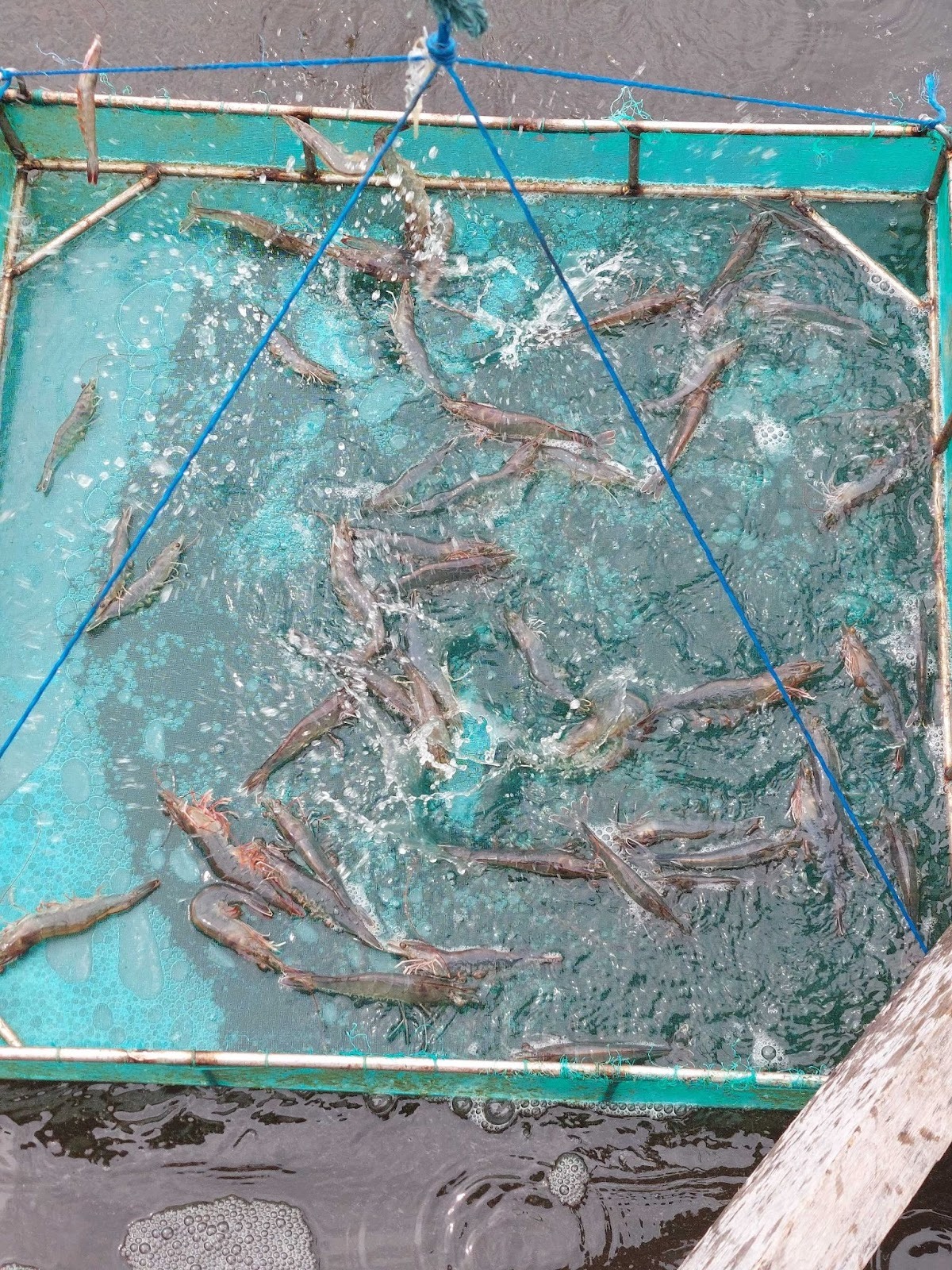
During a recent visit to Indonesia, a team of Hatch Blue’s consulting unit, Gonçalo Santos and Inken Tiedemann, had the opportunity to gain on-the-ground insights into shrimp farming. What quickly becomes clear is that Indonesian shrimp aquaculture is a sector with enormous potential, supported by a favorable climate, strong farming culture, and significant production capacity. At the same time, farmers operate in a challenging environment where biological and operational risks are part of everyday operations.
Disease pressure remains one of the main concerns. Key health issues such as WFD (White Feces Disease), EHP (Enterocytozoon hepatopenaei), AHPND (Acute Hepatopancreatic Necrosis Disease) and others continue to shape management decisions and can significantly impact farm performance if not properly controlled. Water quality management is another challenge, particularly in areas with high farm density where shared water resources make it harder to maintain stable pond conditions.
Beyond farm-level challenges, the broader market environment is also influencing the farming sector. The current situation is complicated by external pressures, including shifting trade dynamics due to U.S. tariffs and recent industry setbacks following reports of radioactive contamination in certain exports. Developments like these can quickly affect market access and highlight how closely production practices and international market expectations are connected.
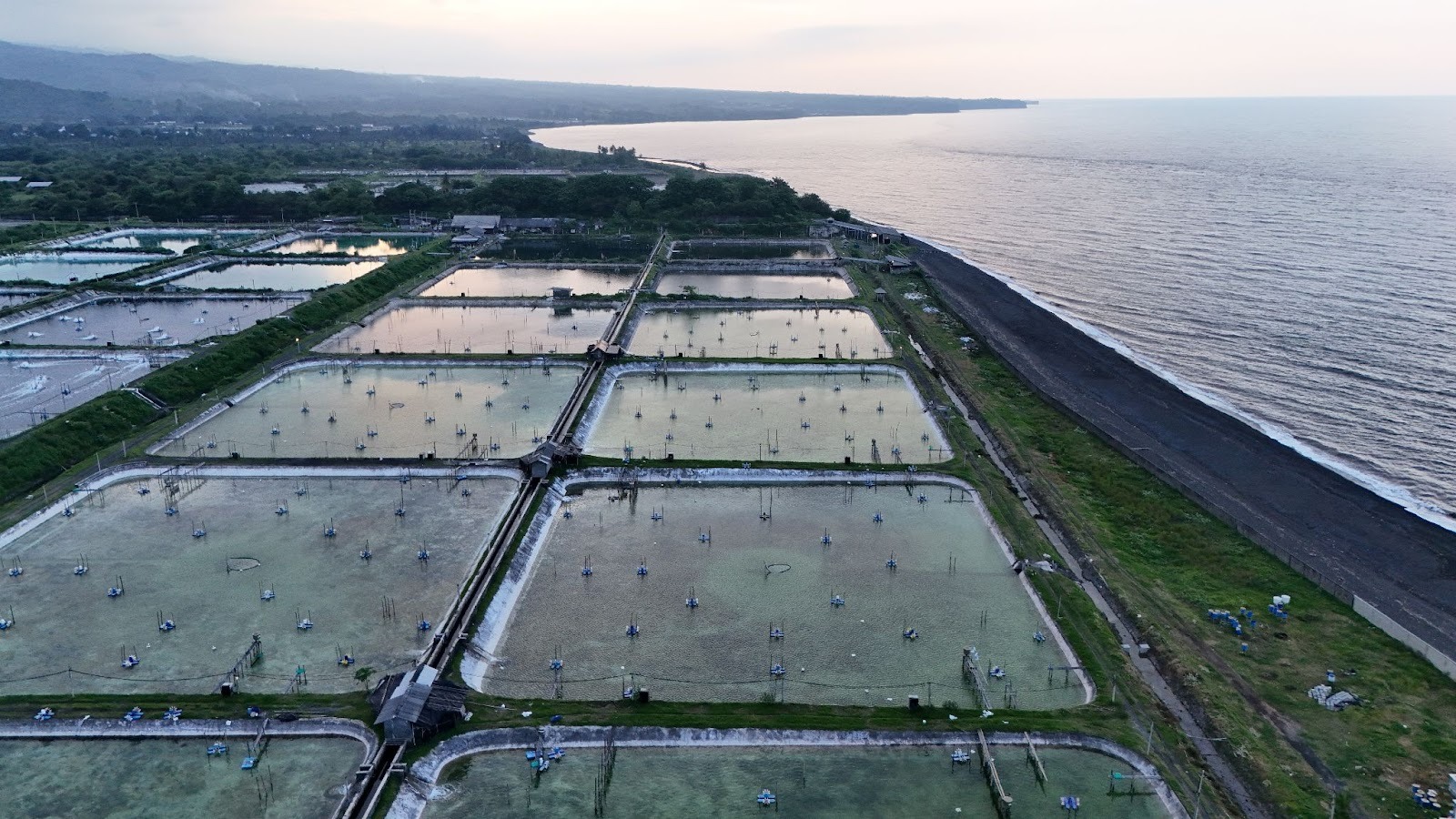
Spending time across different islands and regions offered the consulting team a valuable opportunity to see the industry in practice and understand how these local environments shape production decisions. The trip included visits to several shrimp farms between Lombok and Lampung operated by Sakti Biru Indonesia (SBI). It also offered direct insights into industrial-scale insect farming operations and the use of insect meal for shrimp feed production through a visit to Biocycle’s facilities. SBI and Biocycle are members of PT Kedaulatan Pangan Pertiwi (KPP), a holding corporation focused on strengthening domestic food production capacity and supporting Indonesia’s long-term role in food security.
Shrimp Farming, Health, and Education
A central focus of this visit was observing how SBI is developing their farming model. Across SBI’s farms, there is a clear ambition to move toward a more “best practices”-driven production model, while acknowledging that implementation is still part of an ongoing learning and education process. The Sakti Academy plays a key role in this transition by focusing on shrimp health fundamentals and translating them into practical SOPs and best practices that can be applied at farm level.
Biosecurity and health monitoring are treated as critical building blocks. At selected sites, farms make use of PCR-based disease testing to better understand pathogen pressure and support management decisions. This includes the integration of digital PCR (dPCR) technology developed by Biomed Agritech.
SBI is also experimenting with early-stage technical concepts, including sensor development. These activities are not yet being applied at commercial scale and remain in the R&D phase at the academy, but over the long term they will help farmers and technicians better understand system dynamics, risks, and opportunities for improvement.
Additionally, community support is an important part of SBI’s shrimp operations. The farms provide local employment and practical training opportunities, while partnership models with small-scale farmers aim to share knowledge, improve farm management, and reduce operational risk. The focus is on gradual capacity building, helping farmers adopt healthier practices and more consistent routines over time.
Insect Farming and Alternative Feed Solutions
The visit to Biocycle added an interesting sustainability dimension. Their facilities demonstrate how black soldier fly larvae can be produced at scale using locally available organic by-products. This approach creates a locally sourced protein ingredient that can be used, for example, in aquafeed while using organic waste streams.
Based on early trials and farmer feedback, the inclusion of insect meal in shrimp diets shows promise as a functional feed component, particularly during mid-cycle stress periods. One of the reported benefits includes more robust shrimp performance. In addition, by-products from insect production, such as frass, are returned to local agriculture as a nutrient-rich fertilizer, further closing nutrient loops.
Connecting Farming, Knowledge, and Community
Overall, the trip offered valuable insights into how Indonesian aquaculture is evolving, driven by a strong focus on improving best practices, and innovative solutions such as insect-based feed ingredients. SBI’s integrated approach by combining farming, training, and community support, shows how local initiatives can meaningfully raise standards while supporting both farmers and communities.
Discover how our consulting services can help drive your business forward. Reach out here.
Inken Tiedemann, Project Manager, Hatch Blue
Gonçalo Santos, Director of Operations, Hatch Blue
13 March 2026
Related Posts
Where Is Capital Flowing in Norway’s Salmon Farming Landscape?
Maine: A Natural Hub for Blue Biotechnology
Canada's First Aquaculture Studio: What We Learned